Third-Party Vendor Security: How to Identify, Assess, and Mitigate Vendor Risk

In this article:
- What Third-Party Security Risk Actually Looks Like
- Real-World Examples of Third-Party Attacks
- The Third-Party Risk Management Lifecycle
- Strategies to Reduce Third-Party Security Risk
- Build Stronger, More Secure Partnerships
Every modern business relies on external vendors, from cloud storage providers and SaaS platforms to payroll processors, marketing agencies, and local logistics partners. Outsourcing brings real benefits, but it also expands your attack surface in ways most organizations underestimate.
According to the 2025 Verizon Data Breach Investigations Report, third-party involvement now accounts for 30% of all data breaches, doubling from 15% the previous year. And when a breach does happen through a vendor, it is expensive. IBM’s 2025 Cost of a Data Breach Report puts the average supply chain compromise at $4.91 million, with the longest time to detect and contain of any breach type at 267 days.
Effective third-party vendor security management identifies, assesses, and mitigates these risks throughout the vendor lifecycle. This guide covers how to build a program that actually works for a small or mid-sized business.
What Third-Party Security Risk Actually Looks Like
Third-party vendor security risk is the exposure your business inherits when external vendors, suppliers, or service providers have access to your systems, data, or operations. When people hear “third-party risk,” they think of data breaches. That is one category, but it is not the whole picture. Vendors introduce several distinct types of risk that a complete vendor security program needs to address.
Cybersecurity risk
Vendors often have access to sensitive customer data, and their weak security can lead to unauthorized access to your systems and information. Third-party breaches are increasingly common, as attackers may target a less-secure vendor specifically to gain access to a larger client’s network. Phishing attacks delivered through supplier email accounts, software vulnerabilities in third-party tools, and data privacy leaks from excessive information sharing are all common entry points.
Operational risk
When a third-party disruption impacts your business, such as a service outage or supply chain delay, it can halt operations and cause costly downtime. A breach or incident at a supplier can shut down your business if they provide essential services, even when your own systems are untouched.
Compliance risk
Compliance risks arise when a vendor fails to meet standards like GDPR, HIPAA, or PCI DSS. The hiring organization is often still legally and financially liable for vendor non-compliance.
Reputational risk
When a vendor’s actions, whether a data breach, unethical practices, or public incident, harm your company’s image and customer trust, you inherit that damage whether or not you were directly involved.
Financial risk
If a vendor fails to meet its financial obligations or goes out of business unexpectedly, your organization faces direct losses, service disruption, and potentially legal fees.
Fourth-party risk
Security gaps in your vendors’ own suppliers create hidden risks that are often invisible without deep due diligence. Your vendor’s vendor can breach your data just as easily as your vendor can.
Real-World Examples of Third-Party Attacks
Third-party attacks are not theoretical. They happen constantly, and the cascading impact can be devastating.
Microsoft HAFNIUM (2021). The HAFNIUM group exploited on-premises Microsoft Exchange Server vulnerabilities to breach 30,000 global organizations. Employee email accounts were accessed and malware was installed for long-term persistence. Within a year, 38 million records were breached through related Microsoft Power Apps vulnerabilities, exposing COVID-19 testing data, vaccination records, and employee information at organizations including Ford, American Airlines, and the New York MTA.
Polyfill.io (2024). The polyfill.io supply chain attack compromised a widely-used JavaScript library, injecting malicious code into thousands of websites that depended on the service. Businesses had no idea they were serving malware to their own customers because the vulnerability lived in a vendor’s code.
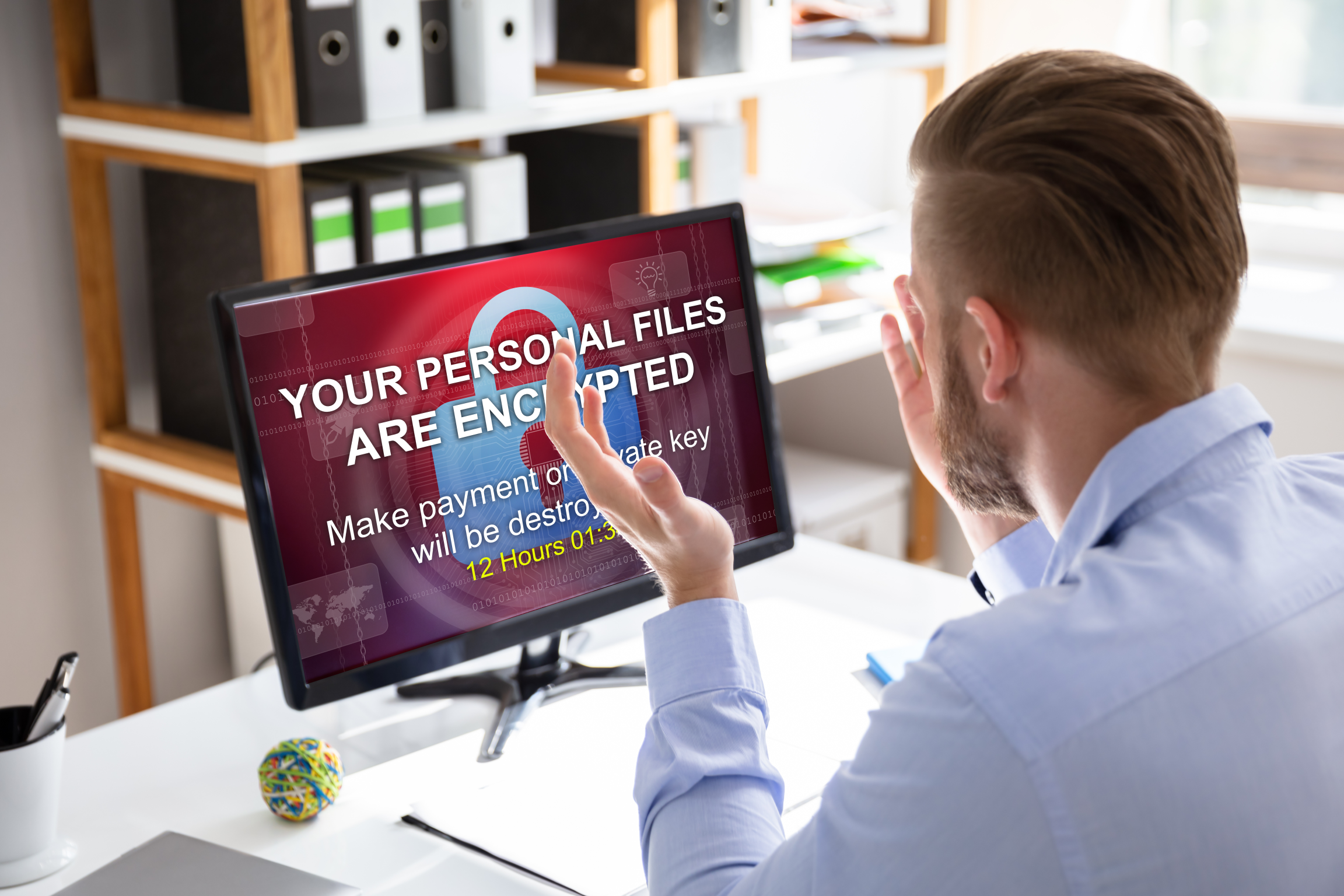
Change Healthcare (2024). A ransomware attack on Change Healthcare, a major healthcare payment processor, disrupted thousands of healthcare providers and ultimately compromised data for an estimated 190 million individuals. Providers who had never directly worked with the attackers found their operations halted because a single vendor in the middle of their supply chain failed.
These examples share a common pattern: the victim organizations did not have a cybersecurity failure themselves. They trusted a vendor who did.
The Third-Party Risk Management Lifecycle
A structured TPRM program manages risk across five phases of the vendor relationship. Skipping any phase leaves gaps that attackers and compliance auditors will find.
1. Vendor due diligence and onboarding. Before signing a contract, evaluate the vendor’s security posture. Use standardized questionnaires to assess their security controls, data handling practices, and compliance certifications. Ask about their own third-party risk management program, since your vendor’s vendors become your fourth-party risk.
2. Risk assessment. Prioritize your vendor inventory by ranking vendors based on their criticality to your operations and the sensitivity of the data they access. High-risk vendors (those with access to sensitive data or systems) need the most scrutiny and ongoing monitoring. Low-risk vendors can be reviewed less frequently, but they still need to be in your inventory.
3. Remediation and mitigation. When assessments uncover gaps, document them with timelines for resolution. Require vendors to remediate critical issues before access is granted or expanded. For risks that cannot be fully eliminated, document the compensating controls you are putting in place.
4. Continuous monitoring. Annual audits are not enough. Continuous monitoring allows organizations to track changes in a vendor’s security profile and compliance status over time. Shift from point-in-time audits to real-time monitoring using platforms like BitSight or SecurityScorecard that track vendor security ratings, certificate expirations, public breach disclosures, and compliance changes automatically. Potentially even consider working with vendors that perform regular penetration testing. AI-powered monitoring systems can detect suspicious activity across vendor connections in real time.
5. Vendor offboarding. When a vendor relationship ends, ensure that all access privileges are revoked and any company data held by the vendor is returned or securely deleted. Offboarding is one of the most commonly skipped phases of TPRM, and it is where dormant access credentials and forgotten data repositories become future breach points.
Strategies to Reduce Third-Party Security Risk
Implementing a real TPRM program does not require enterprise-level resources. It requires consistency and the right focus areas.
Vendor risk assessment. Before engaging with any third-party vendor, evaluate their security policies, procedures, incident response plans, and compliance certifications. Use standardized vendor risk assessment questionnaires so you can compare vendors against the same criteria. Conduct periodic reassessments and audits to verify ongoing compliance with your requirements.
Contractual safeguards. Include strict security clauses in every vendor contract. Effective contract management requires clear service level agreements that cover security obligations, breach notification timelines, data handling requirements, audit rights, and consequences for non-compliance. If your standard vendor contract does not include cybersecurity language, it is not protecting you.
Access controls. Limit vendor access to the specific data and systems they actually need. Implement the principle of least privilege for every vendor account. Require multi-factor authentication across all vendor access points, and enforce strong password requirements. The more access a vendor has, the larger the blast radius when their security fails.
Continuous monitoring. Deploy automated tools to continuously monitor vendor security ratings, certificate health, and compliance status. Real-time monitoring lets you detect emerging risks and respond before they become incidents. AI-powered monitoring adds a layer of behavioral analysis that flags unusual vendor activity even when no known threat signature is present.
Compliance alignment. Make sure your vendors meet the same regulatory requirements your organization must meet. If you are HIPAA-covered, your vendors handling PHI must be HIPAA-compliant. If you handle payment data, your vendors must meet PCI DSS requirements. Ensuring your vendors meet these standards is a key part of your own IT compliance obligations. The EU’s NIS2 Directive expanded mandatory cybersecurity obligations across more sectors in 2023, and the regulatory landscape is only getting stricter.
Security awareness training. Promote a culture of cybersecurity within your organization and train employees to identify risks associated with third-party vendors. Phishing attacks delivered through compromised supplier email accounts are among the most successful attack vectors, and employees need to recognize them. Ongoing cybersecurity services that include training and simulated phishing keep awareness sharp across your team.
Incident response planning. Document how your organization will respond when a third-party breach occurs. Include vendor notification procedures, customer communication templates, and technical containment steps. A breach at your vendor is still a breach for your customers, and how quickly you respond determines whether you retain their trust.
Build Stronger, More Secure Partnerships
Third-party relationships are not going away. Your business depends on vendors, and their business depends on yours. The goal is not to eliminate vendor risk but to manage it systematically so that a single weak link does not bring down your operations, expose your data, or trigger regulatory penalties.
Awareness is the first step. Visibility is the second. Consistent execution is the third.
If you are not sure how exposed your business is through its vendor relationships, start with an assessment. To understand the broader threat landscape targeting businesses like yours, read our guide to the warning signs of cybercrime.
LeadingIT is a cyber-resilient managed IT and cybersecurity services provider. With our concierge support model, we provide customized solutions to meet the unique needs of nonprofits, schools, manufacturers, accounting firms, government agencies, and law offices with 25–250 users across the Chicagoland area. Our team of experts solves the unsolvable while helping our clients leverage technology to achieve their business goals, ensuring the highest level of security and reliability. Call us at 815-788-6041 or book a free assessment today.